


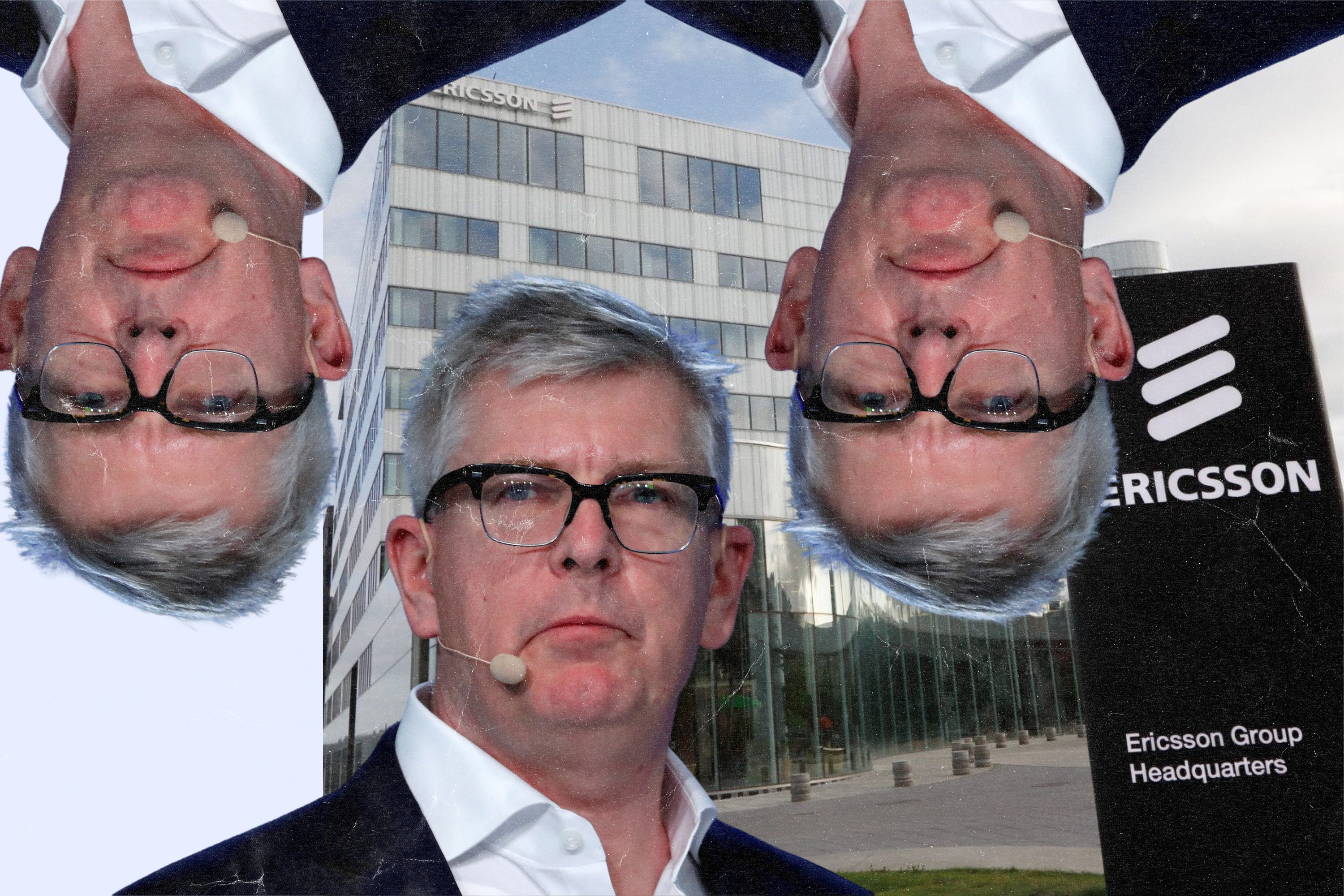
Ericsson’s first quarter results, published on 17 April, look reasonable on the surface. Organic sales grew 6% year-on-year, led by the Networks segment. The adjusted EBITA margin in Networks came in at 50.4%, within the guided 49–51% range. Free cash flow before M&A was SEK 5.9 billion. The company announced a SEK 15 billion share buyback. The reported profit figure (down 73% to SEK 1.8 billion) is dominated by SEK 3.8 billion of restructuring charges from previously announced job cuts in Sweden, which management had already flagged. Strip those out and the underlying business is in reasonable shape.
What I’ve been thinking about since is a sentence from the analyst call.
CFO Lars Sandström, asked about the impact of rising semiconductor costs, said the headwind is coming but that “any significant impact would likely be seen in the second half of the year.” This points to a structural problem for the telecom equipment industry that the quarterly earnings cycle hasn’t yet fully surfaced.
The semiconductor problem that nobody in telecom caused
Ericsson and Nokia both buy large volumes of semiconductors (memory chips, RF components, baseband processors) to build the radio units and baseband equipment that operators deploy in their networks. They are broadly similar in type, though not identical, to the chips that go into AI servers, data centre infrastructure, and high-bandwidth memory stacks.
What has happened over the past eighteen months is that hyperscalers (Microsoft, Google, Amazon, Meta) have been spending at a scale that overwhelms almost any other demand source for advanced semiconductor capacity. AI infrastructure investment globally is running at something in the range of several hundred billion dollars annually. TSMC and the other major foundries are allocating capacity accordingly. Chipmakers like Micron have been redirecting production toward high-margin, high-bandwidth memory for AI data centres and away from lower-margin consumer and enterprise segments. SK Hynix and Samsung have raised prices for certain memory categories by roughly 20% for 2026 orders, according to reporting on the market earlier this year.
Ericsson and Nokia are not AI hyperscalers, and they cannot offer the volumes or the margins that data centre customers can. They are, in a meaningful sense, competing for semiconductor supply against their own customers’ biggest suppliers’ most important clients. And they are losing that competition. It’s not catastrophic but it’s meaningful, and shows up as rising input costs on the cost of goods sold (COGS) line.
CEO Börje Ekholm’s statement that the company is “facing increasing input costs, especially in semiconductors, caused in part by AI demand” is unusually direct for an earnings announcement.
Why the 50.4% margin matters more than the headline profit
The 73% decline in reported EBITA will get the attention, but it’s the wrong number to focus on. Reported EBITA includes SEK 3.8 billion of restructuring charges, costs that are real but largely known, flagged in advance, and expected to generate future savings through reduced headcount. They are not a signal about the underlying health of the business.
The Networks adjusted gross margin of 50.4% is the number that tells you whether Ericsson is managing the cost headwinds. For context: Ericsson spent the better part of 2022 and 2023 with Networks margins well below 40%, as North America investment surged and the company struggled to price its contracts to reflect actual costs. The recovery to the 49–51% guided range represents several years of deliberate work on product mix, software content, and pricing discipline.
The question now is whether that margin range holds through the second half of 2026, when Sandström says the semiconductor cost impact becomes more significant. The company’s answer (working with suppliers, passing costs through to customers, product substitution) is the right set of levers to pull. Whether they’re sufficient depends on how much capacity the foundries redirect toward AI customers, and how much pricing power Ericsson actually has with operators who are themselves under CAPEX pressure.
North America and the buyback
North American sales declined by mid-single digits in Q1. On the call, Ekholm said this trend is “likely indicative of the year.” North America was Ericsson’s most important growth driver in 2024, when network investments surged, and the company reported a 70% increase in Network sales to North American operators in Q4 of that year. The hangover from that investment cycle (AT&T and Verizon both under CAPEX discipline, T-Mobile having largely completed its Sprint network integration) was always coming. The question was timing and duration. Ekholm’s framing suggests it runs through the year.
Against that backdrop, the SEK 15 billion share buyback is interesting. This is Ericsson’s first buyback programme. Launching it in a quarter where reported profit fell 73%, North America is declining, and semiconductor costs are rising, is deliberate messaging: management believes the restructuring charges are temporary, the underlying cash generation is real, and the market is undervaluing the business. Free cash flow before M&A was SEK 5.9 billion in Q1 alone. The net cash position stood at SEK 38.6 billion at the end of Q1 2025, a position substantially rebuilt from the low of the 2022–2023 cycle. Here, the buyback is a credibility statement, as much as a capital allocation decision.
I find myself roughly agreeing with that assessment on the underlying business, while remaining uncertain about the semiconductor trajectory. The structural position (roughly 39% of the global RAN market outside China, a geography that has no credible alternative at scale given the Huawei restrictions) is genuinely strong. The near-term cost environment is genuinely uncertain in a way that depends on variables Ericsson cannot control: how much AI infrastructure investment the hyperscalers sustain, how TSMC and the memory manufacturers allocate capacity, and whether operator CAPEX recovers in North America before H2 pressure materialises.
Where I’d be watching
Three things.
First, the Q2 Networks adjusted gross margin. The guided 49–51% range for Q2 was reaffirmed on the call. If it comes in below 49%, it signals the semiconductor cost pass-through is harder than management indicated, and the H2 picture gets more uncertain.
Second, Nokia’s Q1 results, due 23 April. Nokia faces the same semiconductor cost environment and a similar North America exposure. If Nokia signals a more aggressive cost impact than Ericsson did, it tells you something about whether Ericsson’s mitigation narrative is realistic or optimistic.
Third, any public commentary from AT&T or Verizon on their CAPEX plans for the second half of 2026. North America is the swing factor for both Western vendors. A recovery there absorbs a lot of the semiconductor cost headwind through volume. A continued pullback makes the H2 margin defence considerably harder.
Ekholm said “development seen in Q1 is likely indicative of the trend for the year”. So watch whether that assessment holds when operators publish their own mid-year guidance updates.